


Among all joint diseases, arthrosis is the most common.This pathology is observed in almost 20% of the world population.It is important for both developing and developed countries.More than 2 million patients are registered as suffering from various forms of arthrosis.A fatal outcome from arthrosis is extremely unlikely, but it can lead to early disability, loss of work ability and a significant deterioration in quality of life.
Prevention and treatment of arthrosis should be carried out by a highly qualified medical specialist.
Traditional treatment

For the effective treatment of degenerative-dystrophic joint damage, the entire arsenal of medications, physiotherapeutic, orthopedic and surgical agents is used.It should be noted that great importance in the treatment and prevention of arthrosis is given to choosing the optimal motor mode and normalizing body weight.Traditional therapy includes the following methods:
- Symptomatic treatment.
- Taking chondroprotectors.
- Local therapy.
- Physiotherapy.
- Surgical treatment.
Symptomatic therapy
In most cases, the cause of pain in arthrosis is considered to be reactive inflammation of the synovial membrane of the joint.Therefore, it is quite reasonable to prescribe non-steroidal anti-inflammatory drugs to suppress pain and inflammation.Most often, standard drugs from the NSAID group are used.
When choosing a drug, he gives priority to those drugs that are quite effective, safe and accessible to the majority of the population.At the same time, long-term use of NSAIDs can provoke the development of a serious pathology of the gastrointestinal tract in the form of erosions and ulcers.To prevent such complications, special medications can be prescribed.
It is strongly recommended not to combine different types of non-steroidal anti-inflammatory drugs, as this will not improve the therapeutic effect, but will only significantly increase the risk of side reactions.
Chondroprotectors
Currently, chondroprotectors are successfully used to restore cartilage tissue and prevent the development of pathological changes in joints.In the early stages of the disease, these drugs effectively prevent the progression of the degenerative process.However, in stages 3 and 4 of the disease, chondroprotectors prove to be of little benefit.
Most chondroprotectors are well tolerated by patients.However, unfortunately, they cannot be taken during pregnancy and breastfeeding.Their distinctive feature is that the therapeutic effect occurs on average 3-4 weeks after the start of treatment.At the same time, they continue to act for 2-5 months after the end of chondroprotective therapy.
Prosthesis with synovial fluid
Any specialist will tell you that without synovial fluid a joint cannot function normally.Some types of drugs are used as synovial fluid substitutes.
All medications improve the properties of the synovial fluid, simultaneously suppressing the inflammatory and destructive processes in the articular cartilage.On average, a therapeutic course can include up to 5 intra-articular injections.It is recommended to take up to two courses per year.The indication for repeated therapy with hyaluronic acid-based drugs is increased pain and severe limitation of the functionality of the affected joint.
Only the attending physician can determine the advisability of prescribing a particular drug.
Local therapy
It is rare that arthrosis is treated without the use of local therapy.Intra-articular administration of glucocorticosteroids is used in case of chronic inflammation of the synovial membrane of the joint and lack of adequate analgesic effect from taking NSAIDs.During the year, 3-4 injections of glucocorticosteroids in the joint are allowed.The interval between injections is approximately 90 days.
If there are no contraindications, compresses with pain relievers are used.To achieve the desired effect, 10-12 procedures are prescribed.The possibility of extending the therapy or repeating the courses is not excluded.In addition, various pain-relieving ointments, gels or creams are used to reduce pain and the dose of prescribed NSAIDs.
Physiotherapy
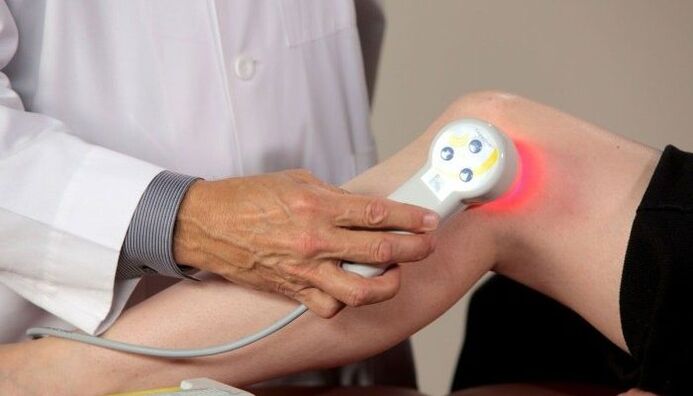
Different physiotherapeutic procedures can be used in all stages of degenerative-dystrophic joint disease.Basic physiotherapy methods help eliminate pain resulting from joint stress, reduce inflammation and improve the restoration of cartilage tissue.What physical procedures are used for osteoarthritis:
- Electromagnetic field.
- Magnetotherapy.
- Ultraviolet radiation.
- Electrophoresis.
- Ultrasound.
- Inductothermy.
- Infrared laser therapy.
- Balneotherapy.
- Mud applications.
Physiotherapy can also be used to prevent osteoarthritis.For example, ultrasound therapy, baths with hydrogen sulfide and radon prevent pathological changes in joint cartilage.
Therapeutic exercises
The main goal of therapeutic exercises is to restore the function of the affected joints, strengthen the muscle-ligament system and prevent the progression of the disease.Let's consider a rough set of exercises that can be used as prevention and treatment of the most common localization of arthrosis - the knee joint:
- Let's get a chair.We stand behind the back of the chair.Bend the left leg slightly at the knee joint.We take a step back with our right foot.Then the leg of this leg moves down.This movement creates tension in the muscles of the lower leg.You should stay in this position for 15 seconds.Repeat several times and switch legs.
- We sit on a chair.We straighten our legs at the knees and keep them straight ahead.It is enough to hold your legs for about 5-7 seconds.If it is difficult to perform, you can do the exercise by pointing only one leg.Do 10-12 repetitions.If you feel well and there is no pain, you can increase the number of approaches.
- We stand with our backs to the wall.Let's take a small step forward.My back is pressed against the wall.We lower ourselves down into a half squat.We try to stay in this position for 5-7 seconds.Then we get up slowly.At the same time, your back does not come off the wall.Increase the static load (holding the position in a half-squat) gradually.
- Regular squats are considered the ideal exercise for the development of the knee joints.The optimal number of squats depends on the patient's condition and the severity of the disease.
- We lie on the floor.Lift your legs up and perform movements reminiscent of riding a bicycle.Do the exercise for 20-30 seconds.Then a short rest and another approach.If your physical ability allows you, increase the time you perform the exercise and the number of approaches.
At any stage of arthrosis without deterioration, therapeutic exercises will be useful to help restore the functionality of the joints.
Surgical treatment
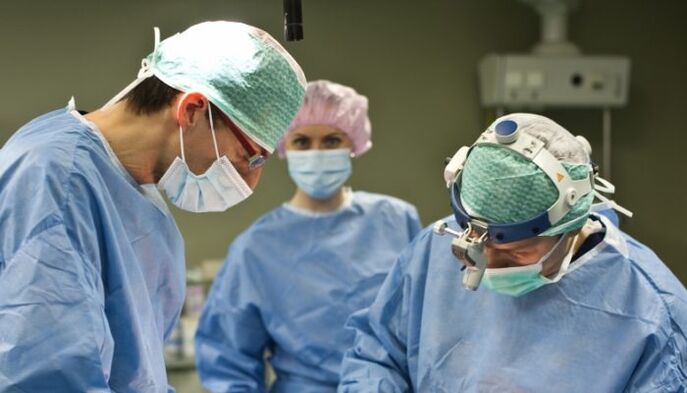
As clinical practice shows, not all patients manage to cope with the disease using conservative methods.If standard therapy does not bring the desired result and severe joint damage is observed, leading to disability, surgical treatment is indicated.Many patients with severe deformities of large joints are recommended to undergo endoprosthetics.The effectiveness of replacing the affected joint with an artificial one is more than 70%.Most patients after endoprosthetics experience a significant improvement in their quality of life.
Traditional medicine
It is difficult not to recognize the fact that in recent years the popularity of the use of folk remedies in the treatment of various diseases, including arthrosis, has increased significantly.Today, without much difficulty, you can find many popular recipes for compresses, ointments and tinctures.Let's list the most common:
- Mud compress.Mix clay and water in such proportions to obtain a homogeneous mass.Then, we put it on a small piece of cloth.Place a clay compress on the affected joint.The duration of the procedure can reach about an hour and a half.You will notice the positive effect after 5-7 days.
- Compress with cabbage and honey.It is particularly popular because it is quite simple to make and apply.Before going to bed, take 3-4 cabbage leaves.On the one hand, you should smear them with honey and apply them to the injured joint.To increase the effect of the compress, you can wrap the joint with polyethylene and a warm cloth.It is best to apply a compress at night.
- Oatmeal compress.Take a glass of oatmeal and cook it for 8 minutes.You will need less water than during normal cooking to get a fairly viscous porridge.At the end of cooking, let the porridge cool.Then, put the oats on a thick cloth.And the compress is ready for use.In addition, it is also recommended to wrap the affected joint with polyethylene and a wool scarf.
- Horseradish compress.Horseradish roots must be chopped.Fill them with water and boil them for a few minutes.Then we place the horseradish evenly on a natural cloth, which we apply to the injured joint.The compress is applied for about 2 hours.
- Rubbing oil from celandine.The leaves and stem of the medicinal plant must be finely chopped.Take 3 tablespoons of celandine and pour into a small jar.Pour 200 ml of vegetable oil into it.We insist for 14 days.Then we drain it.This rubbing with celandine oil can be used as an external medicine three times a day for a month.
- Dandelion rub.Find a bottle, jar or other container made of dark glass.Fill about half of the glass container with dandelion flowers.Then add 400 ml of vodka to this container.You will have to insist for at least a month.Before use, you must strain the juice.Dandelion tincture is used as a joint rub.Typically, the rubbing procedure is best done before bedtime.
- Medicinal baths with herbs.To prepare this bath you will need medicinal plants such as St. John's wort, oregano, calendula, nettle and burdock.Take 3 tablespoons of each ingredient and leave it in hot water for 60 minutes.Then pour the injected liquid into the bath.Take a herbal bath for about 15-20 minutes.
Before using folk remedies in the prevention and treatment of arthrosis of the joints (elbow, knee, thigh), you should definitely consult your doctor.
Preventing
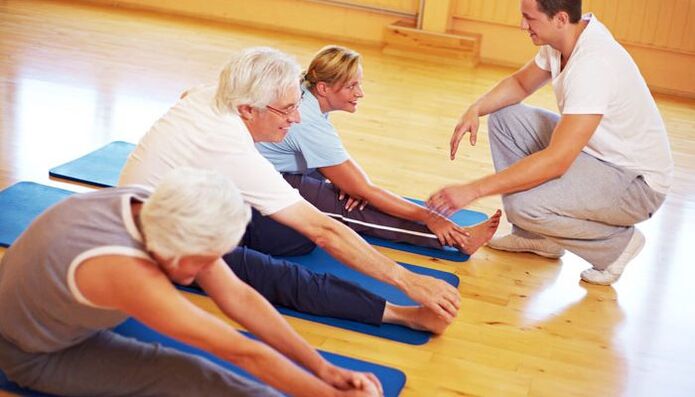
If you do not want to undergo long and continuous courses of treatment, deal with the prevention of arthrosis.Some useful tips that will significantly reduce the risk of developing degenerative disorders in your joints:
- Normalize your weight.
- Avoid injury and damage.
- Eat properly.
- Stick to optimal movement patterns.
- The most beneficial sports for arthrosis are swimming, skiing and moderate walking.
Your musculoskeletal system will be in excellent condition if you do not ignore the recommendations of medical specialists and undergo regular medical checkups.